
2026.05.04

From Lava to Design: Transforming Volcanic Matter

Table of contents

From Lava to Design: Transforming Volcanic Matter

Nature forged by fire becomes an expression of architectural haute couture. The journey of basalt rock, from the earth's magmatic core to contemporary living spaces, represents a fascinating evolution where raw matter meets the most sophisticated design. Through an approach blending technique and vision, lava stone is transformed into a centerpiece for premium interior design.

In this metamorphosis, lavastone kitchen countertops become the focus of durable and textured conviviality, while sophisticated bathroom lavastone sinks redefine the space with a deeply sculptural aesthetic. Likewise, 3D lavastone tiles bring unprecedented visual dynamism to bar counters and walls, just as wall and floor lavastone tiles define walkable areas with timeless elegance, ultimately leading to monolithic tables that celebrate the union of primordial strength and formal purity.

The material's intelligence: anatomy of a living surface

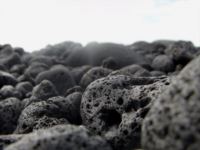
Every extracted block holds a complex geological memory. Architectural lava stone stands out for its unique physical matrix, generated by the slow cooling of lava flows, giving the structure exceptional mechanical strength and a characteristic porosity. Far from being a mere aesthetic quirk, this natural texture becomes the foundation for technical innovation.

Rigorous research into volcanic rock reveals its extraordinary thermal inertia and capacity to absorb and release environmental stress.

This innate "intelligence of the material" allows us to conceive lava stone surfaces that actively interact with their surroundings, ensuring excellent structural performance. The transformation process honors the intrinsic nature of the rock, preserving its deep soul and elevating it to a cornerstone among contemporary architectural materials. Designers find in this stone a formidable ally for translating complex visions into tangible, long-lasting works.
From cutting to enameling: a process of pure alchemy

The material's evolutionary path requires strict methodological rigor and chemical-physical sensitivity. Processing begins with precision cutting, a task entrusted to advanced technologies that define the exact geometries of future architectural surfaces, ensuring millimeter tolerances. This is followed by the delicate glazing phase, representing the true technological and aesthetic peak of the transformation.

During ultra-high-temperature firing cycles, the applied glazes melt and penetrate the natural cavities of the architectural lava stone. This interaction generates molecular-level interpenetration, creating a vitrified surface inseparable from the underlying stone base. Enameled lava stone thus acquires striking color brilliance, bespoke textures, and total resistance to chemical agents, making it the ideal solution for high-wear design contexts.

This unbreakable bond between natural base and ceramic coating is the result of material-driven design, where technical expertise enhances and protects nature's footprint.

Bespoke architectural surfaces: collaborating with designers

Crafting high-profile interior architecture requires a shared vision and a structurally integrated approach. Supporting professionals in developing lava stone projects means interpreting complex spatial visions and translating them into precise, functional components. Creating bespoke architectural materials requires continuous technical dialogue, where feasibility analysis constantly intertwines with the designer's creative intuition.

Custom lava stone thus becomes a textured canvas on which to chart new stylistic trajectories. Whether the concept demands a three-dimensional sculptural cladding, an interlocking module for large areas, or a fluid piece of furniture, lava stone design molds itself to the specific needs of the context. Rejecting any logic of mass standardization, we embrace the authenticity of site-specific solutions, where every single piece is engineered for its exact role within the architectural organism.

The importance of material experimentation in contemporary design

Exploring the physical and expressive boundaries of matter is an essential practice for those actively contributing to design culture. Handcrafted bespoke lava stone offers an extraordinary field of investigation due to its boundless textural and chromatic potential. Through mechanical engraving, CNC milling, and oxide layering, raw stone is sublimated into unprecedented tactile expressions. This ongoing material experimentation ensures the evolution of the design language, positioning solid magma at the forefront of avant-garde research in interior finishes.

Summary of the material transformation process

To fully understand the complexity and added value of this material, it is useful to outline the key phases that take the rock from its raw state to architectural perfection.

Process Phase

Main Technical Action

Material Transformation

Design Benefit

Extraction and Selection

Geological analysis and core drilling of the best blocks.

The rock is isolated while keeping its natural density intact.

Guaranteed structural integrity and consistency for complex processing.

Cutting and Milling

Precision mechanical processing (CNC machinery).

The shapeless block takes on exact geometries, 3D profiles, or thin thicknesses.

Total formal freedom to create custom architectural surfaces.

Treatment and Glazing

Application of custom-formulated glaze and oxide mixtures.

Surface pores are filled, preparing the piece for vitrification.

Endless color customization and definition of specific tactile textures.

High-Temperature Firing

Thermal melting (over 1000°C) in specialized kilns.

The glaze crystallizes, fusing inextricably with the volcanic matrix.

Maximum mechanical strength, waterproofing, and timeless durability.

The integration of matter, research, and design culture

The mindful use of volcanic matter represents a virtuous paradigm where geological memory embraces engineering innovation. Integrating material, research, process, and design culture means decoding the profound value of a complex natural element, methodically guiding it toward its highest functional and formal expression.

Guiding design choices toward these surfaces means investing in works with a strong identity, featuring an aesthetic capable of transcending fleeting trends. The material's integrity, combined with the precision of bespoke craftsmanship, ensures results of the highest caliber, celebrating the earth's primal energy through the rigorous lens of advanced design.

FAQ: Frequently Asked Questions about Architectural Lava Stone

What are the main advantages of enameled lava stone compared to other natural stones?

The ultra-high-temperature fusion between the glaze and the volcanic base gives the material total waterproofing and exceptional resistance to thermal shock, stains, and chemicals. Compared to traditional marble, it also offers a virtually unlimited range of color customizations while keeping the stone's structural strength intact.

How is precision guaranteed in bespoke architectural surfaces?

The process begins with exact measurements and the development of detailed CAD models. The physical processing of the blocks is carried out using high-precision Computer Numerical Control (CNC) machinery, which ensures strict tolerances are met before the piece moves on to the artisanal finishing and glazing phases, guaranteeing a perfect fit in complex projects.

Does the material's natural porosity compromise the hygiene of countertops or sinks?

Not at all. In areas intended for contact with water or food, the glazing process completely vitrifies the surface, sealing every single cavity. This procedure makes the surface entirely hygienic, hypoallergenic, and incredibly easy to clean, making lava stone ideal for kitchen and bathroom applications.