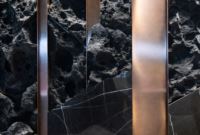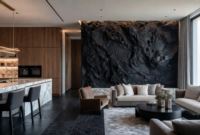
Designing with natural and glazed lava stone requires a profound understanding of material intelligence and a precise vision for contemporary architecture.
At Ranieri, we process this extraordinary volcanic rock, integrating matter, research, and process to create bespoke architectural surfaces that define distinctive interiors.
Whether a complex project calls for expansive lavastone kitchen countertops, intricate wall and floor lavastone tiles, sculptural bathroom lavastone sinks, or highly tactile 3D lavastone tiles for bar counters, the true potential of architectural lava emerges when it enters into a deliberate dialogue with other elements. Pairing this material thoughtfully elevates a space, achieving a luxurious aesthetic grounded in deep material research and design culture.
Complementary Materials for Lavastone Features
Selecting the right companions for custom lava stone involves balancing visual weight and tactile presence. Lava stone, born from extreme heat and pressure, carries an inherent gravitas and structural integrity. Glazed lava stone introduces vibrant, highly calibrated colors and varying degrees of reflection, while natural stone retains its porous, raw geological identity. Architects and designers utilize these inherent variations to establish a sophisticated material dialogue within a space.
Incorporating glass, for instance, provides a transparent, weightless counterpoint to the dense opacity of lava stone design. High-performance ceramics and polished plasters can either mirror the sheen of a glazed finish or highlight the matte, light-absorbing qualities of a raw volcanic surface. Understanding the technical and visual properties of these pairings is crucial for executing complex architectural visions.