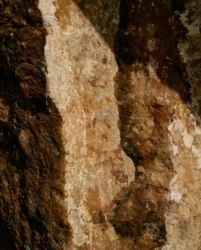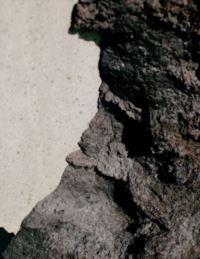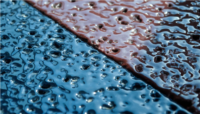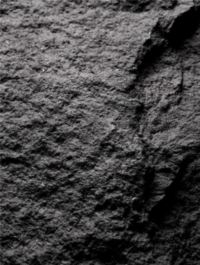
Architectural lavastone represents a deep connection between the primordial force of nature and the refinement of contemporary design. In recent years, continuous material research has made this magmatic surface the undisputed protagonist of the most exclusive interiors and ambitious projects.
Architects and designers regularly choose lavastone kitchen countertops for their unmatched thermal resistance and deep texture, as well as wall and floor lavastone tiles to define rigorous, elegant, and timeless spaces.
The expressive potential of this solidified magma organically extends to custom furniture elements, taking shape in elegant and monolithic bathroom lavastone sinks, captivating 3D lavastone tiles capable of animating entire walls with complex interplays of light and shadow, and sculptural lavastone tables that masterfully blend structural function and pure aesthetics.
The genesis of the material: Etna and Vesuvius compared
The geological and petrographic analysis of Italian volcanic districts reveals fascinating dynamics that ideally unite the south of the peninsula. Etna and Vesuvius, despite their distinct eruptive histories and different landscape conformations, generate a raw material that shares an intimate structural affinity. From a mineralogical perspective, the effusive magma cooling along the slopes of the Sicilian volcano and the one that historically shaped the Campanian territory present comparable characteristics. Both lithotypes belong to the large family of effusive magmatic rocks, characterized by a porphyritic or microcrystalline structure rich in silicates, plagioclase, and pyroxenes.
The natural color variations, ranging from deep grays and anthracite tones to more earthy shades, depend primarily on the specific cooling conditions of the lava flow and the oxidation percentage of ferrous minerals present during the eruption.
Studying these two volcanoes means understanding that the architectural lavastone deriving from both extraction basins offers physical and mechanical performance of the highest level. Etna and Vesuvius essentially represent two sides of the same geological coin. Density, compressive strength, and wear response place these lavastone surfaces among the finest natural materials for interior and exterior architecture.