2025.09.05

Natural Stone vs. Lavastone: Which is Best for Your Luxury Project?

Table of contents

Natural Stone vs. Lavastone: Which is Best for Your Luxury Project?

Selecting the ideal stone material for luxury projects requires careful consideration of durability, aesthetics, and long-term performance characteristics. At Ranieri, we provide natural and glazed lava stone tiles and furniture, including lava stone floor tiles and bar tiles, bathroom sinks, innovative 3D tiles for bar counters, and countertops. Understanding the distinct advantages and applications of different stone types ensures informed decision-making for discerning clients pursuing exceptional design outcomes.

The choice between traditional natural stones and lavastone represents more than a simple material selection, it reflects a project's underlying philosophy regarding sustainability, customization potential, and performance expectations. While conventional natural stones have dominated luxury construction for centuries, lavastone emerges as a compelling alternative that addresses many limitations associated with traditional materials while introducing unique capabilities that enhance both design possibilities and functional performance.


This comprehensive analysis examines the fundamental differences between stone categories, providing essential insights for architects, designers, and property owners navigating material selections for high-end residential and commercial projects.
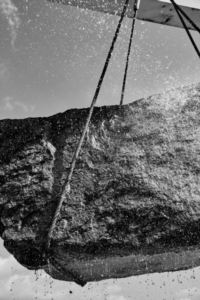
Il grande confronto: pietra naturale vs pietra lavica

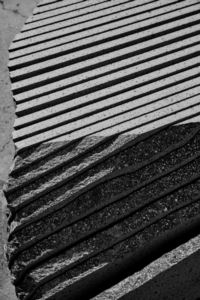
The Great Debate: Natural Stone vs. Lavastone


Traditional natural stones including marble, granite, limestone, and travertine have established reputations in luxury construction through centuries of use in prestigious projects worldwide. These materials offer proven track records and familiar aesthetic qualities that many designers and clients find reassuring. However, their formation processes over millions of years create inherent limitations in consistency, availability, and customization potential.

Marble, revered for its classical beauty and sculptural qualities, presents challenges in maintenance and durability that affect long-term project satisfaction. The material's susceptibility to etching from acidic substances and its porous nature requiring regular sealing create ongoing maintenance obligations that many luxury property owners find inconvenient. Additionally, marble's natural variation, while aesthetically appealing, can create challenges in achieving consistent appearances across large installations.

Granite offers superior durability compared to marble but introduces limitations in color consistency and design flexibility. The material's formation process creates natural variations that can be difficult to predict or control, potentially complicating large-scale projects where material consistency is paramount. Quarrying operations for granite also involve significant environmental impact, a consideration increasingly important to environmentally conscious clients.

Lavastone emerges from volcanic processes with fundamentally different characteristics that address many traditional stone limitations. The material's formation through rapid cooling of molten lava creates a dense, non-porous structure that eliminates many maintenance concerns associated with traditional stones. This geological origin also enables controlled processing techniques that enhance consistency while preserving natural beauty.


Performance characteristics clearly differentiate lavastone from traditional alternatives. The material's exceptional heat resistance, chemical inertness, and dimensional stability create advantages in demanding applications where traditional stones might require special considerations or protective treatments. These properties make lavastone particularly valuable in kitchen applications, outdoor installations, and commercial environments where durability directly impacts long-term project success.

Caratteristiche prestazionali e vantaggi applicativi

Performace characteristic


Performance characteristics clearly differentiate lavastone from traditional alternatives. The material's exceptional heat resistance, chemical inertness, and dimensional stability create advantages in demanding applications where traditional stones might require special considerations or protective treatments. These properties make lavastone particularly valuable in kitchen applications, outdoor installations, and commercial environments where durability directly impacts long-term project success.

Analisi comparativa: durabilità e manutenzione

Comparative Analysis of Stone Types for Luxury Projects


Durability represents a critical factor in luxury project material selection, directly affecting long-term maintenance costs and aesthetic preservation. Traditional natural stones exhibit varying durability characteristics based on their geological formation and mineral composition. Marble's calcium carbonate structure makes it vulnerable to acid damage, while granite's crystalline structure provides superior resistance to scratching and staining.


Lavastone's volcanic formation creates exceptional durability that surpasses most traditional stones in key performance categories. The material's resistance to thermal shock, chemical attack, and physical wear makes it suitable for applications where traditional stones require special protective measures. This durability translates to reduced maintenance requirements and extended service life, important considerations for luxury projects where long-term performance justifies initial investment.

Flessibilità estetica e personalizzazione

Aesthetic flexibility

Aesthetic flexibility distinguishes modern stone options from traditional materials with fixed characteristics. Traditional stones offer beauty derived from natural geological processes, but this beauty comes with inherent limitations in color control and pattern predictability. Large projects may require extensive material selection processes to achieve desired aesthetic consistency across multiple stone slabs.


Lavastone provides aesthetic flexibility that traditional stones cannot match through customizable glazing processes that create unlimited color possibilities while preserving material integrity. This capability enables precise color matching and design coordination that traditional stones make difficult or impossible. The ability to specify exact colors and finishes eliminates uncertainty in material appearance while maintaining natural stone authenticity.

Considerazioni sui costi complessivi

Cost considerations


Cost considerations extend beyond initial material prices to include installation complexity, maintenance requirements, and long-term replacement needs. Traditional stones may offer lower initial costs but can require specialized installation techniques, regular maintenance treatments, and eventual replacement in demanding applications. These factors significantly impact total project costs over extended time periods.


Lavastone's processing capabilities often simplify installation while reducing long-term maintenance needs. The material's consistent characteristics eliminate many variables that complicate traditional stone installations, while its durability reduces maintenance and replacement costs over project lifespans. This cost structure makes lavastone particularly attractive for large-scale projects where material consistency and performance predictability are essential.

Capacità di personalizzazione: pietra naturale e pietra lavica

Customization Capabilities: Natural Stone and Lavastone


Surface finishing represents the primary customization avenue for traditional stones, with options including polished, honed, flamed, and brushed textures. While these finishing techniques create visual variety, they do not address fundamental color or pattern limitations inherent in the materials. Large projects may struggle to achieve consistent appearances when relying on natural variation within traditional stone slabs.

Lavastone customization capabilities extend far beyond surface finishing to include precise color control, pattern development, and texture creation. The material's volcanic composition enables glazing processes that introduce virtually unlimited color possibilities while maintaining natural stone performance characteristics. This capability allows designers to specify exact color matches and create custom palettes impossible with traditional stones.


Project-specific customization ensures that lavastone installations achieve precise design objectives without compromising material performance. Custom color development, texture creation, and dimensional fabrication allow designers to realize specific visions while maintaining consistency across large installations. This level of customization control is particularly valuable in luxury projects where unique aesthetic outcomes justify material investments.

Impatto ambientale: scegliere tra pietra naturale e pietra lavica

Environmental Impact: Choosing Between Natural Stone and Lavastone

Quarrying operations for traditional natural stones create significant environmental impacts that increasingly concern environmentally conscious clients and regulatory agencies. Marble and granite extraction requires removing vast quantities of overburden, altering landscapes permanently, and consuming substantial energy resources for cutting and transportation. These operations also generate considerable waste material that often has limited reuse potential.

Lavastone sourcing from volcanic regions typically involves less invasive extraction processes that align better with sustainable development principles. Volcanic materials naturally regenerate through ongoing geological processes, creating renewable resource characteristics that traditional stones lack. The concentrated availability of lavastone near volcanic sources also reduces transportation requirements for many global markets.

Lavastone processing leverages the material's unique properties to achieve finished products with reduced energy consumption compared to traditional stones. The material's workability and response to modern fabrication techniques create efficiencies that translate to lower environmental impact per unit of finished product. Advanced glazing processes also eliminate the need for many chemical treatments required by traditional stones.

Lavastone's exceptional durability and reduced maintenance requirements minimize lifetime environmental impact while extending service life beyond typical traditional stone installations. The material's recyclability at end-of-life also creates circular economy opportunities that traditional stones may not provide. These factors make lavastone particularly attractive for projects pursuing environmental certification and sustainable design objectives.

Raccomandazioni degli esperti per la scelta dei materiali in progetti di lusso

Expert Recommendations for Stone Selection in Luxury Builds


Project requirements analysis forms the foundation of appropriate stone selection, requiring careful evaluation of functional demands, aesthetic objectives, and performance expectations. Luxury projects often involve complex requirements that demand materials capable of meeting multiple criteria simultaneously. Understanding these requirements enables informed material selection that optimizes both immediate design impact and long-term project success.

High-traffic applications including flooring, stair treads, and commercial surfaces require materials with exceptional wear resistance and dimensional stability. Traditional stones may require protective treatments or design modifications to perform adequately in these demanding applications. Granite offers good durability but may show wear patterns over time, while marble typically requires protective measures to maintain appearance.

Lavastone excels in high-traffic applications through inherent durability that eliminates many protective measures required by traditional stones. The material's resistance to wear, staining, and damage makes it ideal for luxury projects where performance cannot be compromised for aesthetic considerations. This capability makes lavastone particularly valuable in hospitality, retail, and high-end residential applications.

Wet environment applications present specific challenges that significantly affect stone selection criteria. Bathrooms, pool areas, and outdoor installations expose materials to moisture, chemical treatments, and freeze-thaw cycles that can damage inappropriate materials. Traditional stones often require special sealers and maintenance protocols to perform adequately in wet environments.


Long-term value propositions should guide luxury project material selection beyond initial cost considerations. Materials with superior durability, reduced maintenance requirements, and timeless aesthetic appeal provide better value over extended periods despite potentially higher initial investments. The total cost of ownership often favors high-performance materials that eliminate recurring maintenance and replacement expenses.